How Much Does SR-22 Insurance Cost? (2026): the Filing Fee vs the Premium
The filing itself is cheap. The cost people mean is the higher premium a DUI brings. The one number you can pin down is how long you carry it.
Two different costs hide inside the question "how much does SR-22 insurance cost". The SR-22 itself is not insurance and it is not expensive: it is a certificate your insurer files with the state, for a one-time filing fee that commonly runs $15 to $50. The cost people are really asking about is the higher car-insurance premium that follows a DUI while the filing is in force. That number has no single national answer. This page separates the two, explains what drives the premium and points you to the one figure you can pin down.

The two costs, kept separate
- The filing fee. A flat, one-time charge your insurer adds to file the SR-22 with the state, commonly $15 to $50. It is the same small order of magnitude in every SR-22 state.
- The premium surcharge. The real cost. A DUI is one of the heaviest surcharges an insurer applies, so the premium on the policy the SR-22 is filed against is usually much higher than before the DUI. This is what varies from a few hundred dollars a year to several thousand.
An SR-22 is a filing, not a separate policy. Your insurer files it against the ordinary auto policy you already carry. The SR-22 and FR-44 explainer covers what the filing is and which states use which form.
Why there is no single price
No state sets an SR-22 premium, so the number turns on the same factors that price any policy, amplified by the DUI on the record. The main ones:
- Your state. Base rates and the required liability limits differ widely. Florida and Virginia use the FR-44 instead of the SR-22, which requires higher liability limits than a standard SR-22, so those two states tend to cost more to satisfy.
- Your insurer. Companies price a DUI very differently and not all of them file SR-22s at all, so shopping among filers changes the number.
- Your coverage and vehicle. The limits you carry, the car and whether you own one all move the premium.
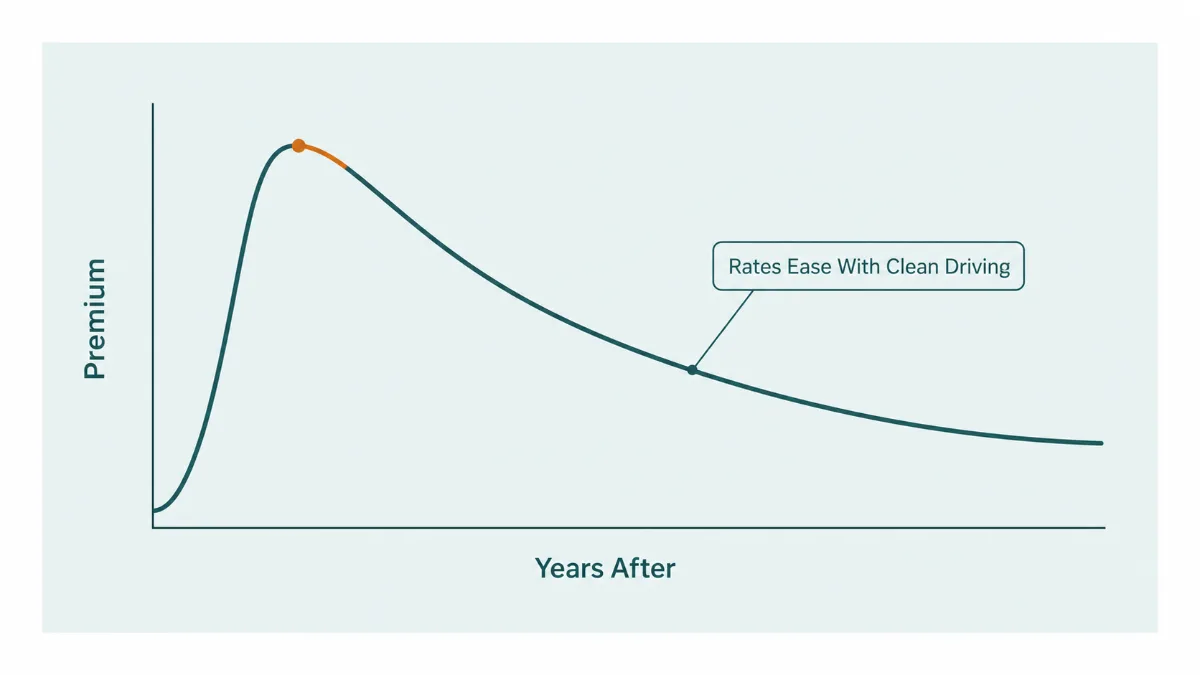
- Your record and how recent the DUI is. The surcharge is usually steepest right after the conviction and eases as it ages.
Because those factors combine differently for every driver, a quoted "average" tells you little. The honest answer is that the filing fee is small and known. The premium is a personal number only your own insurer can quote. Once you have that quote, the cost estimator puts it beside the state fee, the program and the interlock so you can see the whole figure in one place.
Put the filing in order tonight

From the team behind this library
The License Comeback Kit
Want the whole path in one place? The License Comeback Kit hands you the done pieces for your state: the 50-state reinstatement directory and selector, the dependency-ordered checklist, the SR-22 and FR-44 explainer with an insurer call script, a factual interlock comparison worksheet and the compliance and removal tracker.
The one figure you can pin down: how long you carry it
The single part of the cost that is fixed by law is the duration. It drives the total, because you pay the higher premium for the whole filing period. Most states run the SR-22 for 3 years. The confirmed exceptions in this library: Kansas at 1 year, Iowa, Missouri and Texas at 2 years and Alaska at 5 years. A shorter term means a shorter higher-premium window, so a 2-year state costs less over the life of the filing than a 3-year state at the same annual premium. Your state page carries the confirmed duration, or flags it to confirm where the state does not publish one.
SR-22 cost in Texas, Illinois and Ohio
The pattern is the same in each: a small filing fee plus a premium the insurer sets, with the state fixing only the duration.
- Texas. The SR-22 must be maintained for 2 consecutive years under Transportation Code Section 601.161, one of the shorter terms in the country, so the higher-premium window is shorter than the national norm.
- Illinois. The SR-22 runs 3 years (36 months) from the filing date, the standard term, so a driver carries the surcharge across the full three years.
- Ohio. Ohio ties the SR-22 to the suspension: it must stay valid through the end of the suspension period. The exact total length is best confirmed with the Ohio BMV, since the published sources do not settle one figure.
The non-owner SR-22, if you do not own a car
A driver who needs to file but owns no vehicle can use a non-owner SR-22: a non-owner liability policy with the SR-22 filed against it. It satisfies the filing for reinstatement and usually costs less than an owner policy, because there is no specific vehicle on it. Confirm your state accepts a non-owner filing with the licensing agency and your insurer.
The rest of the bill
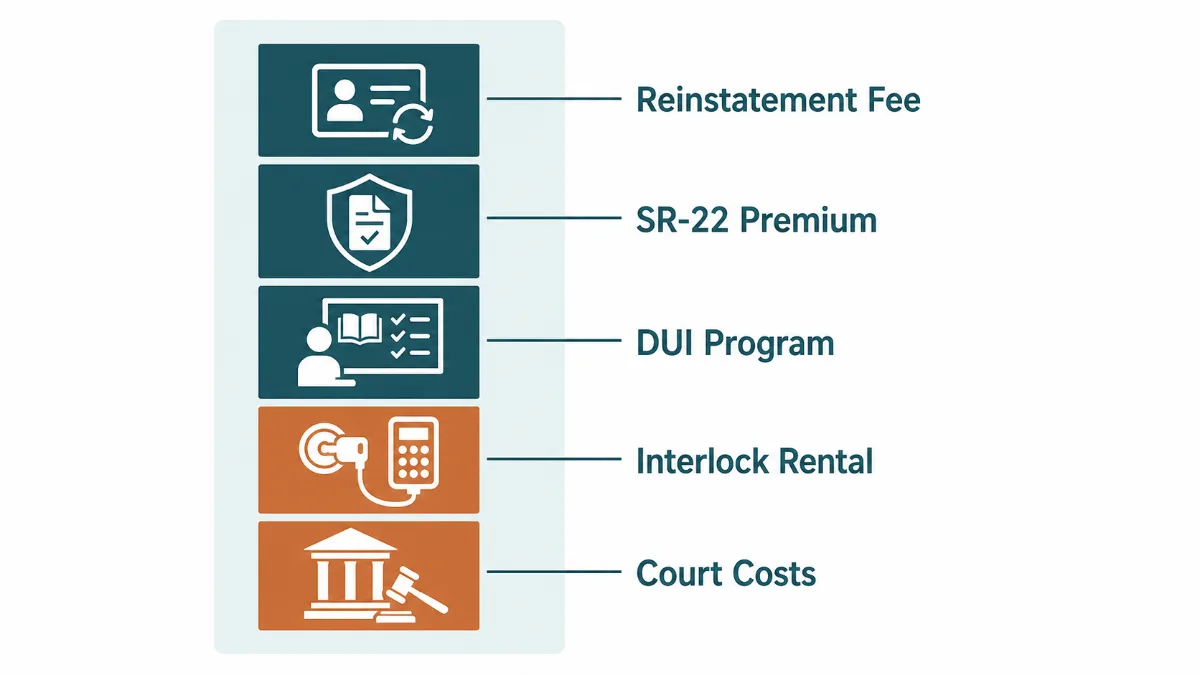
The filing plus the premium is one line of a reinstatement and rarely the only one. How to reinstate your license after a DUI sets it beside the state fee, the program tuition and the interlock, in the order the steps come, then the cost estimator totals your own figures into one itemized range.
This guide is educational information, not legal or insurance advice. It does not recommend or sell any insurer. Filing fees, premiums and durations change by state, insurer and case. The dollar bands here describe the filing fee, not a premium quote. Confirm the current requirement and your own price with your state and a licensed insurer before you act.
SR-22 cost FAQ
How much does SR-22 insurance cost?
The SR-22 filing itself is cheap: a one-time fee your insurer charges to file it, commonly $15 to $50. The cost people mean by "SR-22 insurance" is the higher car-insurance premium that follows a DUI while the filing is in force. That premium has no single national figure because it turns on your state, your insurer, your coverage and your record. The one part you can pin down is how long you carry it, which is set by state law.
How much is SR-22 insurance in Texas?
Texas charges the same kind of small filing fee to add the SR-22. The premium after a DWI depends on the driver and the insurer rather than a set state price. What Texas fixes is the duration: the SR-22 must be maintained for 2 consecutive years under Transportation Code Section 601.161, a year shorter than the 3-year term most states use, so the higher-premium window is shorter than average.
How much does SR-22 insurance cost in Illinois?
As in every state, the Illinois filing fee is small and one-time; the variable cost is the post-DUI premium, which no state sets. Illinois requires the SR-22 to stay in force for 3 years (36 months) from the filing date, so a driver carries the higher premium across that full term. Confirm your own figure with your insurer.
How much is SR-22 insurance in Ohio?
The Ohio filing fee is the same small one-time charge; the premium is set by the insurer, not the state. Ohio ties the SR-22 to the suspension: it must stay valid through the end of the suspension period. The exact total length is best confirmed with the Ohio BMV and your insurer rather than assumed, since the published sources do not settle a single figure.
Does an SR-22 make your insurance premium go up?
The SR-22 filing itself is a small fee and does not raise the premium on its own. What raises the premium is the DUI behind it, which is one of the largest surcharges an insurer applies. So a policy carrying an SR-22 after a DUI is usually much more expensive than before, by an amount that varies widely by driver, state and insurer. The filing simply keeps that coverage certified with the state.